The online trading industry continues to attract investors searching for opportunities in forex, CFDs, commodities, and cryptocurrency markets. While some brokers operate under strict financial regulation, many offshore trading platforms present significant risks due to weak oversight, questionable licensing, and aggressive investment marketing.
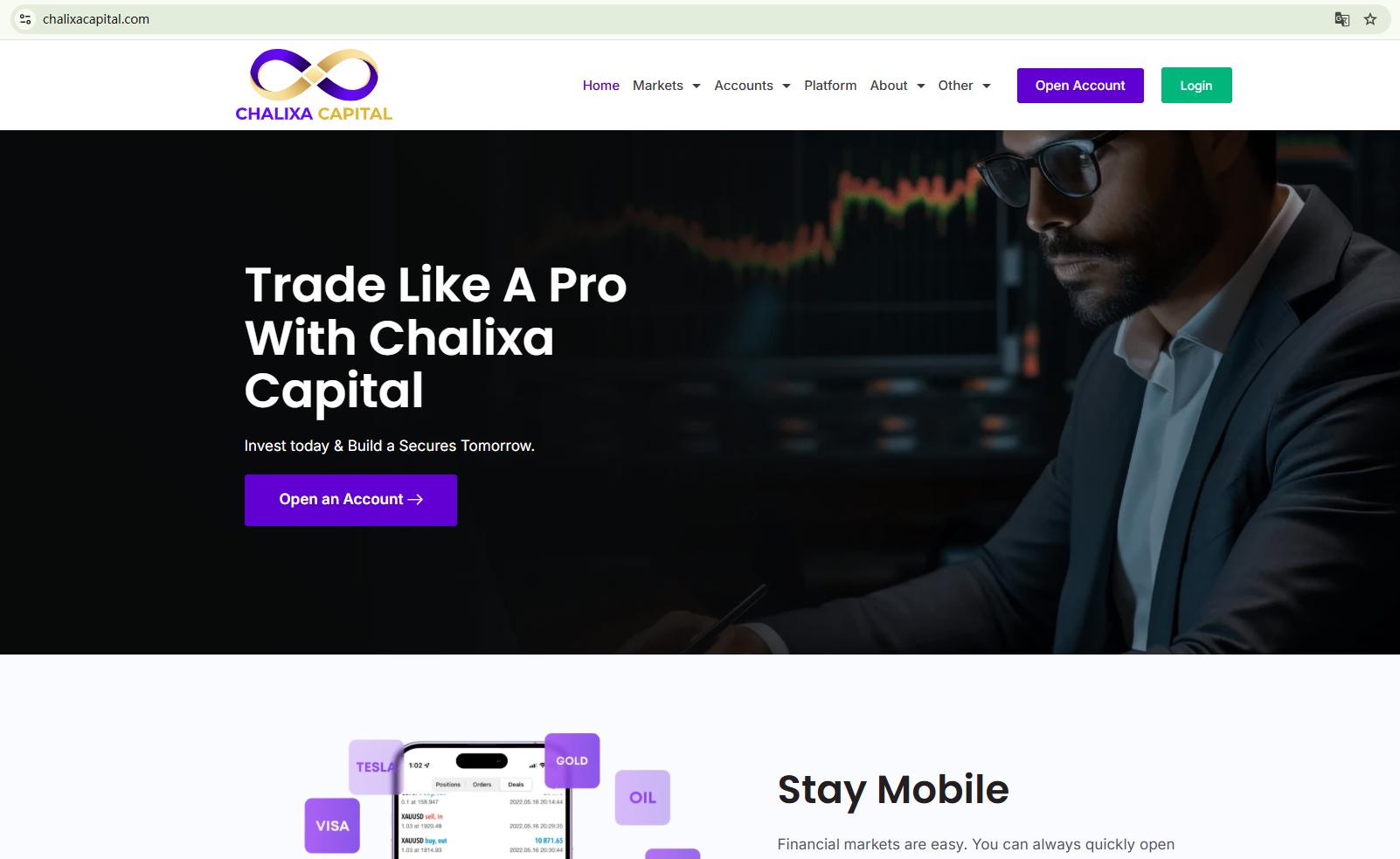
One broker currently raising concerns is Chalixa Capital, operating through the domain chalixacapital.com. The platform advertises forex and CFD trading services through MetaTrader 5 while promoting high-leverage investment opportunities. However, independent broker reviews and scam-monitoring services reveal several warning signs investors should examine carefully before depositing funds.
No Verified Forex Regulation Raises Serious Concerns
One of the most significant warning signs involving Chalixa Capital is the apparent lack of verified financial regulation. Independent broker-monitoring platform WikiFX states that no valid forex trading license could be found for the broker and categorized the platform as “High Potential Risk.”
Legitimate forex brokers usually provide verifiable licenses from major financial authorities such as:
- FCA (United Kingdom)
- ASIC (Australia)
- CySEC (Cyprus)
- SEC or CFTC (United States)
Without proper regulatory oversight, investors may have little protection if disputes arise, withdrawals become delayed, or funds disappear entirely.
Unregulated brokers are commonly associated with forex scams, crypto recovery scams, and high-risk offshore trading operations.
FIND LEGAL HELP HERE
Offshore Saint Lucia Registration Increases Investor Risk
WikiFX reports that Chalixa Capital Ltd. is registered in Saint Lucia.
Saint Lucia is frequently used by offshore brokers because it does not impose the same strict regulatory standards required by top-tier financial jurisdictions. Offshore registration alone does not automatically mean a broker is fraudulent, but it significantly increases risk because investor protections are often extremely limited.
Many offshore brokers use jurisdictions like Saint Lucia to avoid strict compliance requirements involving:
- Client fund segregation
- Investor compensation programs
- Regulatory audits
- Financial reporting standards
- Consumer dispute resolution systems
This structure is frequently observed among risky CFD brokers and cryptocurrency investment schemes.
Very New Domain Registration Creates Elevated Risk
Independent scam-monitoring services report that the Chalixa Capital domain is very young. Scamadviser noted that the website was registered recently and warned users to remain cautious with newly established financial platforms.
Fraud analysts consistently warn that newly registered investment websites deserve heightened scrutiny because scam operations often:
- Launch fresh domains quickly
- Aggressively market investment services
- Collect deposits from investors
- Shut down after complaints appear
Platforms launched after 2022 should always be examined carefully, especially when they promote forex trading, cryptocurrency investing, or high-return financial opportunities.
Extremely High Leverage Can Be Dangerous
WikiFX reports that Chalixa Capital offers leverage as high as 1:500 on some account types.
Although high leverage may appear attractive, it dramatically increases trading risk. Strict regulators usually limit leverage for retail traders because excessive leverage can rapidly wipe out investor balances.
For comparison:
- FCA retail leverage limits are generally capped at 1:30
- ASIC applies similar retail protections
- EU regulators also impose lower leverage limits
Brokers offering very high leverage through offshore jurisdictions often target inexperienced traders seeking fast profits without fully understanding the risks involved.
High-leverage marketing is extremely common among forex scams and speculative CFD trading operations.
Hidden Ownership and Limited Transparency
Another concerning issue involving Chalixa Capital is the lack of transparent ownership information. ScamAdviser reports that WHOIS registration details are hidden.
Legitimate financial companies usually provide:
- Executive leadership information
- Public corporate records
- Transparent regulatory documentation
- Audited operational history
- Clear legal accountability
Anonymous ownership structures make it significantly more difficult for investors to recover funds or pursue legal remedies if problems occur.
Fraud investigators repeatedly identify hidden ownership as a recurring characteristic among suspicious investment platforms and fake brokers.
High Minimum Deposits Raise Additional Questions
WikiFX reports that some Chalixa Capital account types require very large minimum deposits, including accounts reportedly starting at $1,000 and $10,000.
Scam investigators often warn that suspicious brokers may pressure users into upgrading accounts or depositing larger amounts quickly. High deposit requirements can expose investors to larger financial losses before they fully evaluate the broker’s reliability.
Common scam-broker tactics include:
- Encouraging larger deposits with “premium” benefits
- Offering bonus incentives tied to deposit thresholds
- Assigning aggressive account managers
- Promoting unrealistic trading opportunities
These strategies are frequently associated with cryptocurrency investment fraud and high-risk CFD operations.
Weak Public Reputation and Elevated Risk Warnings
Several independent review platforms continue to flag Chalixa Capital as high risk. WikiFX specifically issued a warning advising users to stay away due to the absence of valid regulation.
ScamAdviser also noted several negative indicators, including:
- Very young website age
- Low traffic rankings
- Hidden ownership details
- Registrar connections associated with spam activity
Low public reputation combined with limited operational history should always encourage caution before depositing funds.
How Investors Can Protect Themselves From Trading Scams
Before opening an account with any broker, investors should always:
- Verify licenses directly with official regulators
- Research domain registration history carefully
- Avoid brokers promising guaranteed profits
- Test withdrawals using small amounts first
- Avoid excessive leverage exposure
- Ignore pressure tactics from account managers
- Research independent reviews thoroughly
Investors should also remain cautious of recovery scammers who promise to retrieve lost funds in exchange for upfront payments.
FIND LEGAL HELP HERE
Final Verdict on Chalixa Capital
Chalixa Capital displays several warning signs commonly associated with high-risk offshore trading brokers. The lack of verified regulation, offshore registration in Saint Lucia, hidden ownership information, extremely high leverage, young domain age, and elevated risk warnings from independent review platforms collectively create a concerning risk profile for investors.
While every investor should conduct independent due diligence, the available evidence strongly suggests exercising extreme caution before depositing significant funds with this platform.
The safest approach remains working exclusively with fully regulated brokers that provide transparent licensing, established operational histories, strong investor protections, and independently verifiable compliance records.